Next Steps for CDCF: Communities, Contributions, and Historical Moments Now
The Catholic Digital Commons Foundation launched earlier this year.
Our builders have been active. This goes deeper into next steps, communities you can contribute to, and what this extraordinary moment means for Catholic builders everywhere.
Ways to Engage Right Now
- Help: Join the Catholic developer communities. Improve one document. Answer one question. Bring your gifts to the commons.
- Build: Submit a project and contribute to open infrastructure that will outlast any single volunteer or organization.
- Use: Deploy our open tools for your parish, diocese, or Catholic nonprofit.
Contributions to the Commons
We are a builder commons, aggregating, vetting, and communalizing open source tools built by Catholics who love the Church. As the early Church modeled: “The community of believers was of one heart and mind, and no one claimed that any of his possessions was his own, but they had everything in common” (Acts 4:32). Across countless repositories and disparate governance structures, Catholic tools have been initiated: identity systems, liturgical calendars, workflow engines, Bible APIs. We give them a durable home.
We are guided by a Technical Advisory Council of engineers, scientists, digital missionaries, and Catholic media pioneers. They bring together expertise spanning NASA, Fortune 500 technology firms, Catholic AI platforms reaching millions, and the frontlines of digital evangelization globally.
Our Ecclesial Advisory Council includes priests, theologians, and Church leaders embedded in Rome’s pontifical institutions and episcopal conferences worldwide. They range from Benedictine monks serving the global Confederation in Rome to Maronite engineers advising European bishops to bioethicists researching AI and transhumanism at the UNESCO Chair.
We have academic partners at Catholic universities on three continents. Six languages. Thirty-one countries and growing.
Leaders here emerge from the community, for the community. If you have expertise and passion for this space, reach out to us.
Now is the Time
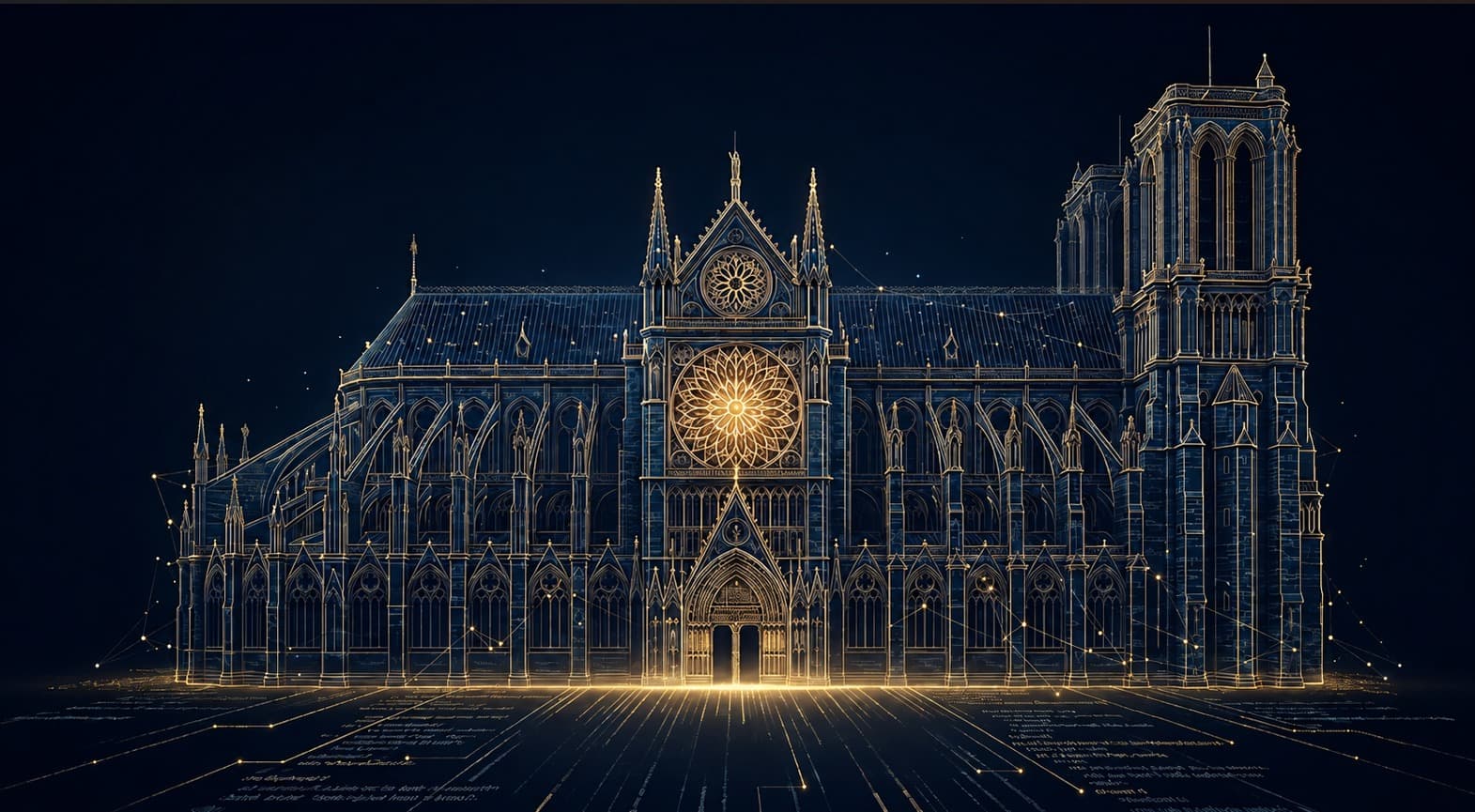
The digital cathedral is being built right now, by someone. Pope Benedict XVI called it a vast new missionary frontier. The Synod on Synodality confirmed it: digital culture is a crucial dimension of the Church’s witness in contemporary culture. The Church has been saying this for decades. The moment to act has arrived.
Pope Leo XIV’s encyclical Magnifica Humanitas, signed May 15 and releasing next week, is expected to make this calling explicit at the highest level of Church teaching. CDCF exists to walk alongside Catholic builders in exactly this moment.
A Timeless Tradition in Our Code
The Church has always been a custodian of knowledge and a translator of truth into the language of every age. The monks who preserved manuscripts through centuries of upheaval. The cathedral schools that became the first universities. The Church Fathers who carried the Gospel into the philosophical language of their time. We are doing the same work today, in the language of code, protocols, and APIs.
“We are God’s co-workers; you are God’s field, God’s building.” — Saint Paul, 1 Corinthians 3:9
Two thousand years later the building continues. The field has expanded to a digital cathedral. The co-workers are engineers, priests, theologians, and lay missionaries in thirty-one countries. The foundation is the same.
“We need stronger, more considered, more human technology.” — Romano Guardini, Letters from Lake Como (1927)
The Catholic intellectual tradition is the most coherent and durable foundation from which to build it. Our work is a builder commons, aggregating, vetting, and communalizing open source tools built by Catholics who love the Church. Governed by six principles from the Rome Call for AI Ethics: transparency, responsibility, impartiality, reliability, security and privacy, and inclusion. Grounded in the uncompromising truth of imago Dei
As the early Church modeled: “The community of believers was of one heart and mind, and no one claimed that any of his possessions was his own, but they had everything in common” (Acts 4:32). That is the spirit in which we build.
We stand at one of the most extraordinary moments in human history. A new digital industrial revolution offers powerful tools, among them church ministries redesigning their services and communities strengthening relationships with the vulnerable.
The digital cathedral is being built. We want you in that work.
Share this post
Comments
Comments are coming soon.